
TERVUREN, Belgium — Tervuren’s Royal Museum for Central Africa has this year found itself at the center of a diplomatic and commercial dispute pitting Belgium against the United States and the Democratic Republic of Congo. Embellishing the dispute are rumors of a mysterious visit to Tervuren by Bill Gates on behalf of the AI-driven U.S. mining exploration company, KoBold Metals. Rumors the Museum denies.
“I wonder where the strange rumors about Bill Gates come from,” Bart Ouvry, the director-general of the AfricaMuseum, told Tervuren+. Reports had alleged that Mr. Gates visited the museum around the time he inspected the Brussels Sewer Museum. The reports claimed that the billionaire offered a massive donation on the condition that Microsoft be allowed to digitize the AfricaMuseum’s geological records from Central Africa.
Did the museum refuse? When exactly did Mr. Gates visit? “He did not visit the museum,” Mr. Ouvry noted flatly, dismissing the speculation. He added that there was never an offer from Mr. Gates or Microsoft to digitize the collection.
However, the museum did host a high-profile visitor this month: the Congolese Mining Minister, Louis Watum Kabamba, who toured the facility alongside Belgian and European Union officials. “He was able to verify on site the progress of the project to digitize the mining archives held by the Belgian State Archives and the AfricaMuseum,” Mr. Ouvry stated on social media. “It will enable the DRC to significantly expand knowledge of its subsoil and strengthen the expertise of its scientists,” he added.
What Lies Beneath: A Century of Geological Wealth
The historical archives housed in Tervuren are staggering in their scientific and commercial scope, spanning hundreds of thousands of documents, hand-drawn field maps, and physical rock and soil samples. “At the Museum, it’s half a linear kilometer; at the National Archives, it’s also half a linear kilometer. That amounts to millions of documents,” Mr. Ouvry said by email.
Compiled during Belgium’s colonial rule of Congo from 1885 to 1960, these meticulously kept records contain precise, localized data regarding the geology and mineral wealth of the Democratic Republic of Congo, as well as neighboring Rwanda and Burundi.
The colonial-era geological documents could prove to be a roadmap to unlock vast, untapped mineral wealth in the D.R.C. for KoBold Metals. The California-based exploration firm is backed by Mr. Gates’ Breakthrough Energy Ventures, boasting a high-profile investor base that includes Amazon founder Jeff Bezos.
Proprietary data could heavily assist KoBold Metals in identifying rich new deposits of copper, cobalt, lithium, and other critical minerals essential for electric vehicles, renewable energy systems, and advanced technologies. The exploration firm struck a deal with the Congolese government last year to deploy its technology, which combines artificial intelligence and human expertise to accelerate geological discoveries.
The Ethics of Tervuren’s Colonial Collection
The unfolding situation has revived deep-seated historical tensions over Belgium’s legacy in the Democratic Republic of Congo. Critics note the length of time that it has taken for Belgium to begin digitization, sixty-five years after independence was celebrated in Kinshasa.
Congolese authorities emphasize that ensuring their own geoscientists have access to reliable, high-quality data is an urgent matter of national development.
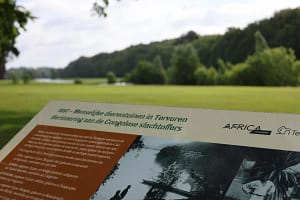
The AfricaMuseum itself carries a heavy historical weight; it was originally built to showcase the stolen wealth of King Leopold II’s brutal colonial regime, opening in 1897 as the Palace of the Colonies and notoriously hosting a “human zoo” of Central African people.
To avoid corporate monopolies claiming the data, the European Union’s €51 million PanAfGeo+ program is helping fund digitization. The process is expected to take several years, after which the geological data will be fully accessible to scientists and researchers in both Belgium and the Congo.
FAQ: Tervuren’s Human Zoo
What was the Tervuren Human Zoo?