
Tervuren municipal councillors have unanimously approved new rules that will in practice require residents to pay up to €350 to private certified pest controllers to remove Asian hornet nests. The era of paying €80 for fire brigade interventions now appears to be coming to an end.
The new regulation comes as the fire brigade prepares to stop removing Asian hornet nests located below eight metres from 1 June. This change is expected to push residents towards private certified pest controllers, who can charge several hundred euros per intervention.
Former mayor and now alderman for animal welfare Marc Charlier had attempted to preserve the previous system, under which the fire brigade charged exactly €82.28 per intervention and the municipality reimbursed €80. That arrangement is now set to be phased out.
Cost gap widens for nest removal below eight metres
If residents now have to turn to the private sector, costs can quickly rise into the hundreds of euros, Charlier acknowledges. The difference between €80 and up to €350 is no longer a minor administrative detail, but a significant cost shift for households—particularly when nests are discovered just below the eight-metre threshold.
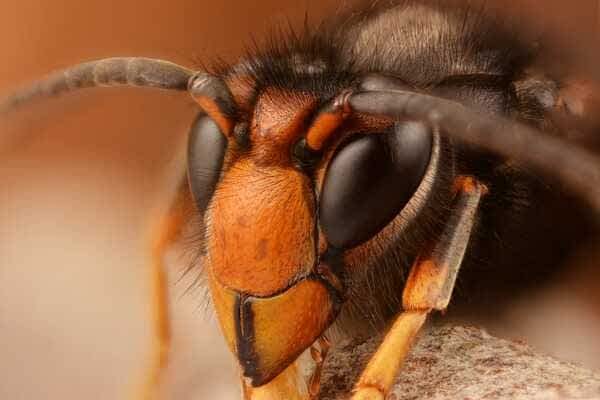
The Asian hornet is an invasive species that preys on honeybees and other pollinators and may behave aggressively when defending its nest. The species has spread rapidly across Flanders in recent years, including in Tervuren.
The new rules were roundly welcomed by opposition Groen+ Tervuren. “We are taking an important step in the right direction for nature, biodiversity and food production. It is also a positive step for citizens,” Elmo Peeters told the municipal council.
However, critics warn that limiting fire brigade intervention to nests above eight metres could allow the invasive species to establish itself more easily, as early-season nests are typically built low to the ground and may now go untreated.
In spring, queens build small primary nests close to the ground. Later in the season, colonies typically relocate to secondary nests high in trees, where populations can grow to several thousand individuals.
“Chocolate jar traps” suggested as prevention idea
On prevention, Charlier said municipal services already trap around 200 queen hornets each year, but rejected calls to provide free traps to residents. Instead, he suggested an unconventional alternative: DIY “chocolate jar traps”.
“If it works, I might even organise a competition,” Charlier joked. “Whoever catches the most hornets gets a new jar of chocolate spread from me.”

Last year, fire services spent 2,239 hours removing Asian hornet nests across 32 municipalities in eastern Flemish Brabant—roughly one intervention per hour on average.
Charlier has also previously warned about environmental risks linked to treatment methods. He cautioned that insecticides used against hornets could be harmful if they reach waterways, adding that even small quantities could have severe ecological impacts.
The municipality has allocated €5,000 for 2026. Future compensation will depend on available funds and strict eligibility conditions. According to the new rules, subsidies do not apply to other insect nests such as wasps or European hornets.
To qualify for reimbursement, nests must be removed either by the fire brigade or a certified pest controller. Applications must include an invoice and confirmation of the removal location and species.
The scheme was adopted unanimously and entered into force on 8 May 2026, with retroactive effect from 1 March.
Asian hornets in Tervuren: what residents need to know
The municipal council has introduced a subsidy scheme to support residents dealing with the invasive Asian hornet. The measure follows growing concern about biodiversity loss and pollinator decline.
Residents can receive up to €80 per eligible nest removal, provided it is carried out by the fire brigade or a certified pest controller. The key rule is simple: do not approach the nest and do not attempt removal yourself.
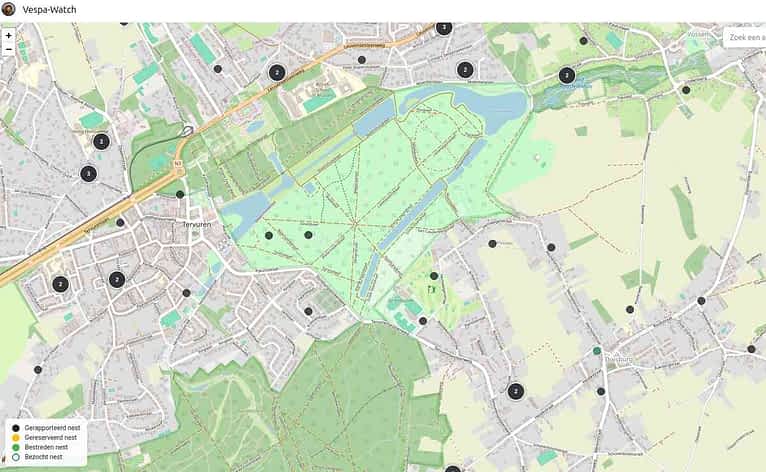
Suspected nests should be reported via Vespa-Watch. In urgent cases near homes or public areas, contact the fire brigade via 1722.be.
More information: tervuren.be/aziatischehoornaar. In short: spot, report, keep your distance—leave removal to professionals.
Background: Why early intervention matters
The Asian hornet was first recorded in Belgium in 2011. The first confirmed nest in Flanders was reported in 2016. Since then, the species has spread across the region, including into Tervuren.
In spring, queens establish small primary nests close to the ground. Later, colonies move to secondary nests high in trees, which can contain thousands of individuals.
Early detection and removal of primary nests is considered key to limiting the spread of the species. Once large secondary nests are established, control becomes significantly more difficult and costly.
Authorities and environmental agencies, including Natuur en Bos, encourage reporting via Vespa-Watch, where sightings are verified before intervention.
Responsibility for dealing with nests ultimately depends on location, with landowners often required to act when nests are found on private property.
Have a news tip?
Message us on WhatsApp