
A major exhibition in Tervuren is exposing the brutal reality concealed within a colossal 1913 painting that once served as Belgium’s official account of its colonial venture. The Royal AfricaMuseum talks of a critical reckoning with colonial “fake news”.
For decades, the AfricaMuseum has symbolised Belgium’s complex and often contentious ties with Congo. Its new exhibition, The Congo Panorama 1913, confronts the museum’s former role as a vehicle for state propaganda.
At its centre is the Congo Panorama, a vast 115-metre circular painting that dazzled visitors at the 1913 Ghent World Exhibition. Created by Belgian artists Alfred Bastien and Paul Mathieu, it was an early form of immersive spectacle, designed to overwhelm viewers with an idyllic and harmonious vision of the colony.
Illusion of Utopia
Following global condemnation of atrocities committed under King Leopold II, the Belgian state assumed control of Congo in 1908. The Panorama became a key propaganda tool, depicting Congolese people ‘welcoming’ Belgian settlers and modern technology. Its message was unambiguous: colonisation was a legitimate and beneficial ‘civilising mission’.
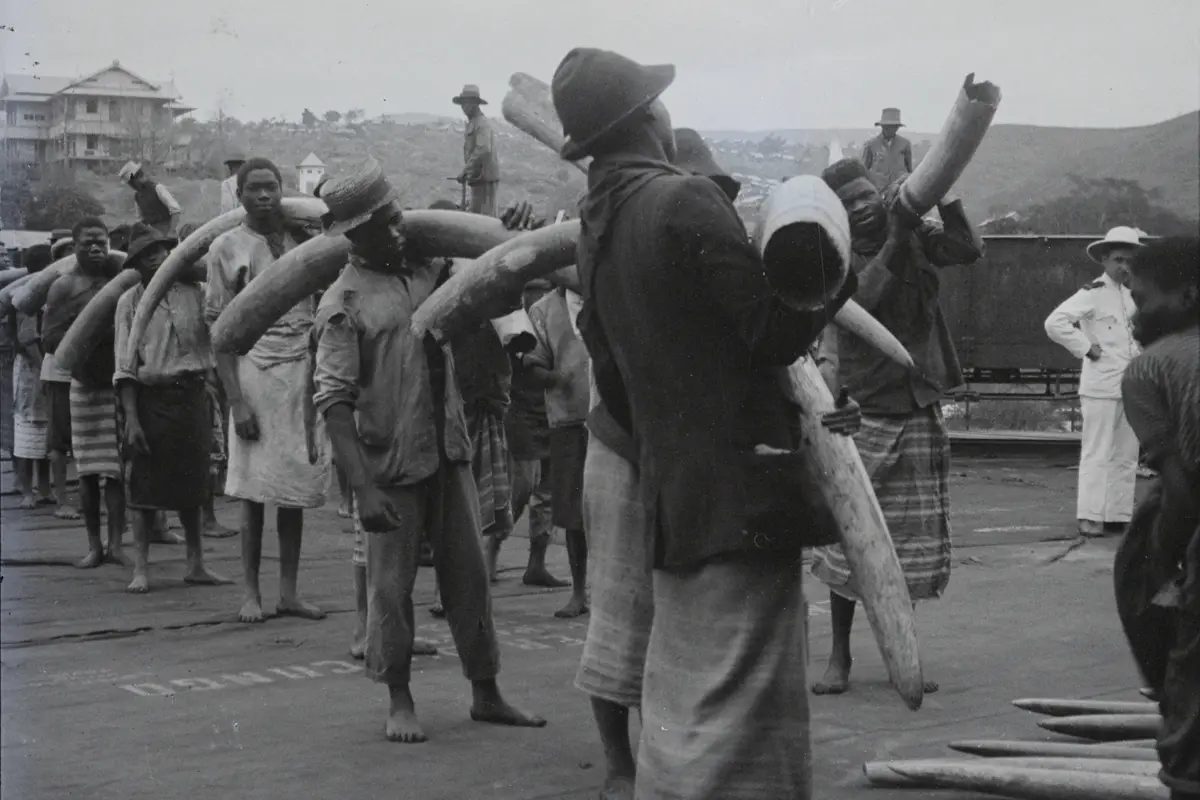
The exhibition dismantles this narrative by placing the painting alongside archival evidence. The few porters shown in the Panorama belie the scale of forced labour, in which thousands of Congolese were compelled to carry loads often exceeding 40kg over long distances. The AfricaMuseum presents the artists’ own photographs of prisoners in chains—images deliberately excluded from the final work.
The calm portrayal of Force Publique soldiers masks their involvement in coercion and violence, while any sign of Congolese resistance was erased. Even the lush forests in the painting mislead: Belgium’s extraction of rubber, ivory and timber generated vast profits but inflicted profound environmental and human devastation.
“This exhibition is part of a broader movement within the museum to actively challenge and rethink colonial heritage,” says Director-General Bart Ouvry, a former Belgian ambassador to DR Congo. “I am convinced that this fascinating exhibition will show visitors that what we now call ‘fake news’ also existed over a century ago. The colonial enterprise was essentially a geopolitical and economic story that was far from idyllic for Congolese people,” Ouvry adds.
Tervuren played a central role in shaping this colonial narrative, beginning with the 1897 International Exhibition, where 267 Congolese men, women and children were placed on display in a human zoo at Tervuren Park. Seven died and, since 1953, have lain in neglected graves at the Sint-Jan Evangelist church. For half a century, they were buried in unconsecrated ground traditionally reserved for outcasts.
By staging this challenging exhibition—and acknowledging that the Panorama’s original sketches form part of its collection—the AfricaMuseum reinforces its commitment to critical engagement, following the launch of its “Let’s talk about racism” space in 2023.
The Congo Panorama 1913. Colonial illusion exposed runs at the AfricaMuseum, Tervuren, Belgium.
Exhibition dates: 28 November 2025 – 27 September 2026
Admission: Full price €13; Concessions €6; Under-18s free.
FAQ: Tervuren’s Human Zoo
What was the Tervuren Human Zoo?
The Tervuren Human Zoo was part of the 1897 Brussels International Exhibition. King Leopold II ordered a vast “Colonial Section” in Tervuren to promote his Congo Free State. As part of this propaganda effort, 267 Congolese men, women and children were transported to Tervuren and displayed in fenced “villages” near the Tervuren ponds. Seven died during the exhibition.
Why were Congolese people exhibited?
The display aimed to legitimise Belgian colonialism by presenting Congolese people as “exotic” and “primitive”. This reinforced racist hierarchies and encouraged public support for Leopold II’s extractive colonial project. The exhibition combined ethnographic displays, staged daily life and economic propaganda.
How many people visited the Human Zoo?
Millions visited the 1897 exhibition, and colonial fairs across Europe attracted more than a billion visitors between the late 19th and mid‑20th centuries. These events shaped public perceptions of Africa and entrenched stereotypes that still influence European societies.
Was Tervuren’s Human Zoo unique?
No. Belgium organised similar exhibitions in Antwerp (1885, 1894) and Brussels (1958). Tervuren’s edition is especially significant because it was directly tied to the Congo Free State, one of the most violent colonial regimes in modern history.
How is this history remembered today?
The AfricaMuseum in Tervuren has reworked its exhibitions to confront colonial violence and racism. Recent shows, including Human Zoo: The Age of Colonial Exhibitions, use archives, photographs and testimonies to document the lives of the Congolese people displayed in 1897.
Why does this matter now?
The Human Zoo remains central to debates on racism, colonial memory and the restitution of looted artefacts. Belgium has begun cataloguing 84,000 objects taken from Congo, a step toward transparency and accountability.
