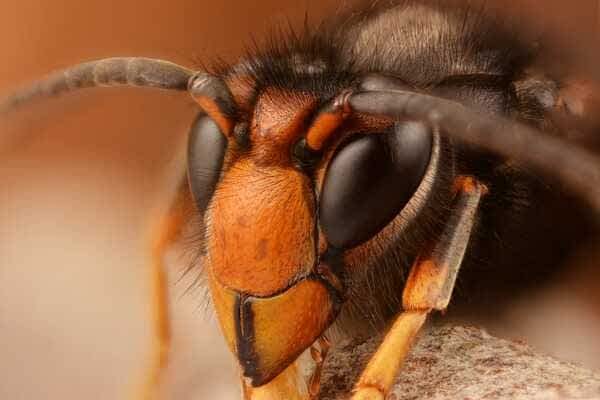

At Tervuren’s latest council meeting, elected officials somehow managed to cram invasive species, environmental anxiety, a muddy bike path to Brussels, and diplomatic garbage rights into a single, meandering evening. The unlikely star of the hour-long episode: the Asian hornet.
The invasive migrant—widely blamed for tearing through native bee populations across Belgium—is steadily advancing through Tervuren. Councilor Elmo Peeters (Groen+Vooruit) urged the town to act before the problem metastasizes, calling for the town to dedicate €5,000 per year to destroy Asian hornet, even on private property.
If we wait, the problem only gets worse, Peeters warned during the hour-long debate. But his proposal stalled almost immediately. Concerns piled up over who would do the work, which methods would be used, and—most controversially—the poison involved.
Former N-VA mayor Marc Charlier, now the mobility alderman with responsibility for animal welfare, sounded the alarm about environmental fallout. The insecticide used to kill hornets, he cautioned, could be disastrous if it reached local waterways. “A very small quantity could wipe out all life in the water,” Charlier said, urging the council to hold off until “the right method” was guaranteed.
Privileged diplomats’ rights to trash
Tervuren Unie/Volt councilor Tracey D’Afters raised concerns that diplomats living in the leafy, ambassador-heavy municipality were being quietly locked out of the new Diftar waste system run by Interrand. No accounts. No letters. Possibly no for residents with diplomatic ID to throw away garbage, if not fly-tipping. “Some people with diplomatic status have no access at all,” D’Afters said.
Finance and environment alderman Jan Trappeniers pushed back. “It’s not correct to say they have no access,” he insisted. Diplomats can still use the container park—if they know to show up at city hall and request a special pass. The problem, the alderman admitted, is that GDPR rules prevent the town from directly contacting diplomats. In other words, residents must already know they’re excluded in order to fix it.
Asked how non-Dutch-speaking diplomats were supposed to figure all this out, Trappeniers—who by day manages operations at a major freight company—was unmoved. “The communication will be in Dutch,” he said.
By the end of the night, no hornet nests were funded, no poison approved, no mud cleared from Tervuren’s stretch of the forest bike path to Brussels, and no diplomatic trash privileges clarified. In Tervuren, even wasps and waste have become deeply political.
Asian hornets in Tervuren: what to do
Asian hornets are turning up again in Tervuren, and the rulebook is brutally simple: don’t go near the nest, don’t touch it, don’t play hero.
Report every suspected nest through Vespa‑Watch: www.vespawatch.be for species confirmation and tracking.
If the nest is close to your home, garden, or anywhere people could get stung, escalate to the fire brigade via: www.1722.be
Cost: in Tervuren, the fire zone (Hulpverleningszone Oost‑Vlaams‑Brabant) charges €82.28 for destroying a hornet or wasp nest.
More info from the municipality: tervuren.be/aziatischehoornaar. In short: spot, report, step back—let the professionals take the sting.
Have a news tip?
Message us on WhatsApp